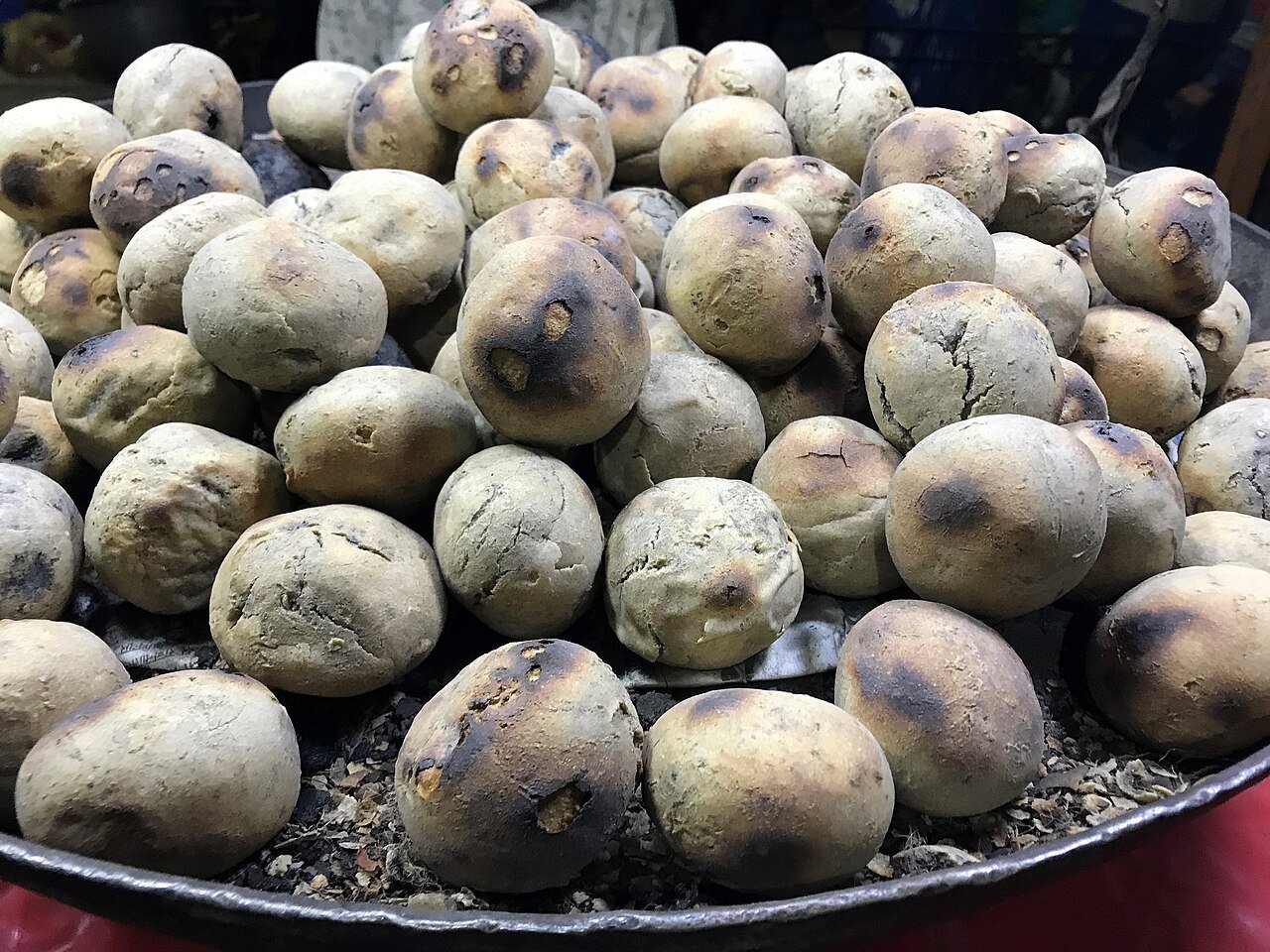
Ingredients
Equipment
Method
Dough
- Mix the atta, salt, ajwain and ghee, rubbing the ghee in with your fingers. Add water a little at a time and knead to a soft, smooth dough, a touch firmer than chapati dough. Cover and rest for 20 minutes.
Filling
- Mix the sattu with all the filling ingredients except the water. Add water one spoon at a time until a fistful pressed in your palm holds its shape but breaks apart when you poke it. It should feel like damp sand, not a paste.
Chokha
- Roast the brinjal directly on a gas flame, turning with tongs, until the skin is charred all over and the brinjal collapses and feels soft right through (about 12-15 minutes). Roast the tomatoes the same way until the skins blister and split. Cool slightly and peel.
- Mash the brinjal, tomatoes and boiled potatoes together. Mix in the garlic, green chilli, onion, coriander, mustard oil and salt. Taste and adjust.

Shape
- Divide the dough into 8 equal balls. Flatten one into a 4-5 inch circle or a cup shape, keeping the edges thinner than the centre. Add about 2 tbsp filling, bring the edges up, pleat, pinch shut and roll gently between your palms into a smooth ball with no cracks. Keep the shaped litti covered with a cloth.
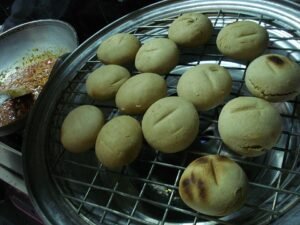
Cook
- Oven: Preheat to 200°C (400°F). Place the litti on a greased tray and bake for 30-40 minutes, turning every 10-12 minutes, until the crust is firm and dry with golden-brown patches.
- Tawa or appe pan: Heat a heavy tawa (or appe pan) on low-medium heat, brush lightly with ghee, add the litti and cover. Turn every few minutes until browned on all sides and cooked through. Expect it to take longer than the oven; go by the doneness check, not the clock.

- Check one: break it open. The inside should be dry and cooked, with no doughy layer under the crust. If it is still doughy, cook the batch a little longer on lower heat.
Serve
- While the litti are hot, crack each one lightly and dip or brush it with melted ghee. Serve straight away with the chokha, sliced onion, green chillies and lemon.

Notes
Quantities and times are a starting point: ovens, tawas and flours differ, so use the visual checks in each step. The filling texture is the key: if a pressed fistful crumbles, add water a spoon at a time. Litti is best eaten fresh and hot.