

Quick answer: Hornbill Festival 2026 runs from Tuesday 1 December to Thursday 10 December at Kisama Heritage Village, about 12 km south of Kohima, Nagaland. Indian visitors from outside Nagaland need an Inner Line Permit, which you can get online; foreign visitors currently need a Protected Area Permit. Plan four days: arrive via Dimapur, spend two full days at Kisama, and give one day to a Naga village such as Khonoma. Book your room before anything else, because Kohima fills up fast.
Hornbill is the one festival where the planning matters more than the festival itself. The arena is easy: you walk in, and the tribes are there. What trips people up is the permit, the hill road from Dimapur and finding a bed. This guide sorts those three first.
In this guide
Hornbill Festival 2026 at a glance
| What | Details |
|---|---|
| Dates | 1–10 December 2026 (Tue to Thu). 1 December is Nagaland Statehood Day. |
| Edition | 27th |
| Venue | Naga Heritage Village, Kisama, about 12 km from Kohima. Smaller extensions are planned in 6–7 other districts. |
| Entry ticket | 2026 fee not announced yet. It was ₹150 per person in 2025. |
| Indian visitors | Inner Line Permit (ILP), online at ilp.nagaland.gov.in, valid 30 days |
| Foreign visitors | Protected Area Permit (PAP), compulsory since December 2024 |
| Gateway | Dimapur (airport and railway station), then road to Kohima |
| Organisers | Departments of Tourism and Art & Culture, Government of Nagaland |
Step 1: sort your Hornbill Festival permit
Indian citizens: the ILP
Unless you’re from Nagaland, you need an Inner Line Permit to enter the state. The easiest way is the official portal, ilp.nagaland.gov.in:
- Register with your mobile number and verify the OTP.
- Choose the Tourist category and fill in your travel dates.
- Upload a photo and a government photo ID.
- Pay the fee online and download the permit once it’s approved.
Every traveller applies separately, children included. The portal says a tourist ILP applied for during working hours may be approved within about four hours, but don’t leave it to the airport. Apply a week ahead, and keep a printed copy as well as one on your phone; checks happen at entry points and phone signal isn’t guaranteed. A tourist ILP is valid for 30 days. Check the current fee on the portal’s fees page, since it has been revised more than once.
Foreign visitors: the PAP
Since 17 December 2024, foreign nationals need a Protected Area Permit for Nagaland. The state government has asked the Union Home Ministry to relax this from 15 November to 15 December 2026 for Hornbill, but that hadn’t been approved when we checked. Assume you need the PAP, apply well ahead, and only change plans if an official notice says otherwise.
Step 2: get to Kohima
By air: Dimapur airport has flights from cities including Guwahati, Kolkata and Delhi. From Dimapur, Kohima is roughly 70–75 km up a hill road. Allow about three hours, more in festival traffic.
By train: Dimapur railway station is the railhead. From there it’s the same road trip to Kohima by taxi or shared vehicle.
Via Guwahati: useful if flights to Dimapur are full or expensive. It’s a long day by road or a train to Dimapur first, so add a day.
One thing worth knowing: shared taxis from Dimapur leave when they fill, and the last ones go up in the afternoon. If your flight lands late, book a private taxi or spend the night in Dimapur and go up in the morning.
Step 3: choose where to stay
| Kohima | Near Kisama (Kisama, Kigwema, Jakhama) | |
|---|---|---|
| Best for | Most hotels, restaurants, the evening programmes in town | Walking to the festival, village atmosphere |
| Stay type | Hotels and guesthouses | Homestays, campsites and festival tent stays |
| Getting to Kisama | About 12 km; taxis and shared vehicles, slow in peak hours | Walk or a short ride |
| Drawback | Traffic on the Kohima–Kisama road | Very cold at night; fewer food options after dark |
I’d recommend a homestay near Kisama if you mainly want the festival, and Kohima if you also want the music nights and restaurants. Dimapur is too far to commute from each day.
What you’ll see at the Hornbill Festival in Kisama
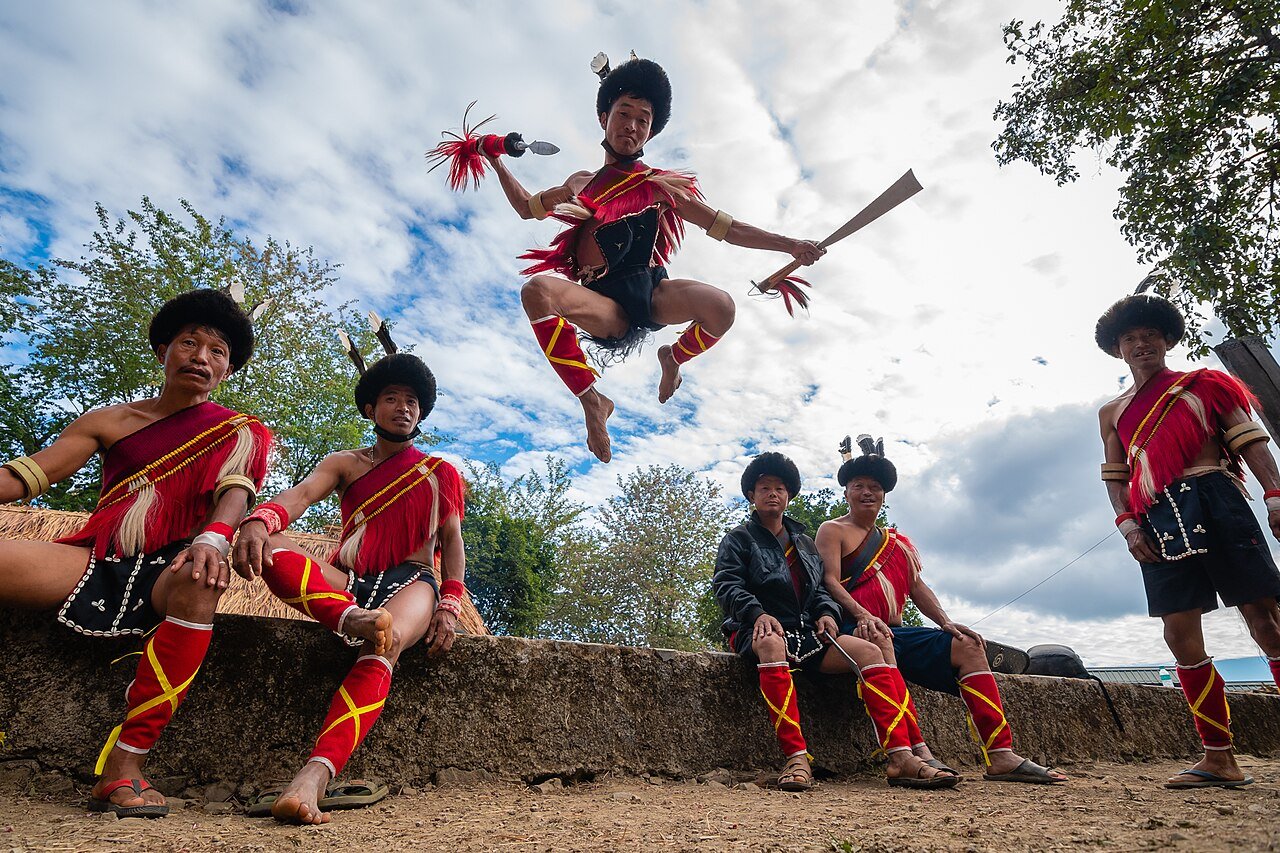
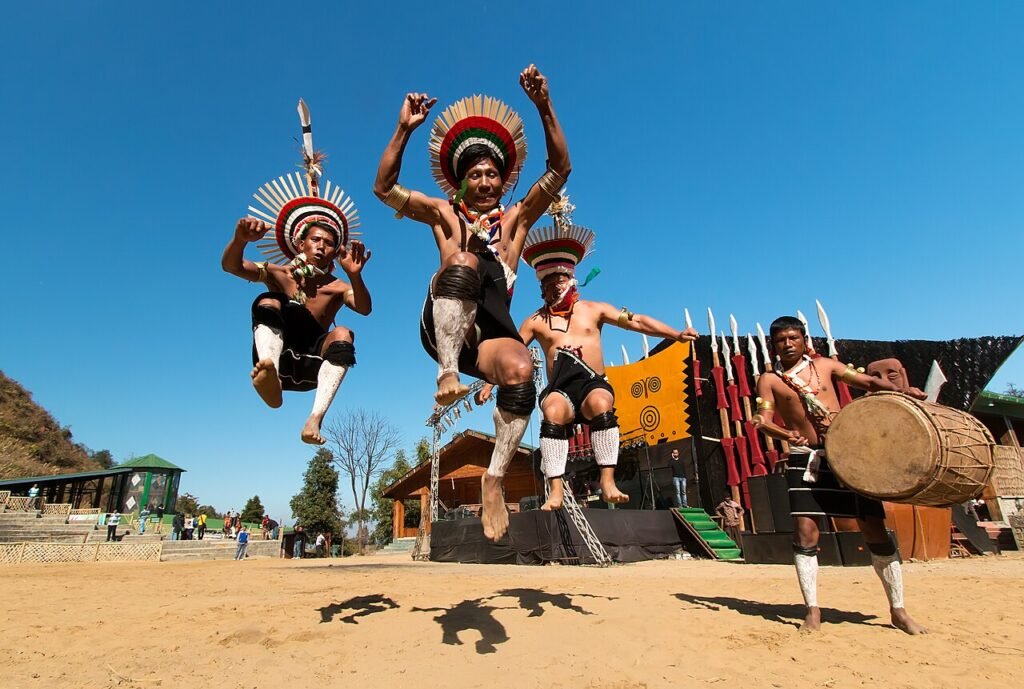
Kisama is laid out as a heritage village, with a morung (traditional youth dormitory house) for each of Nagaland’s tribes around a central arena. Through the day you’ll see:
- Tribal performances in the main arena: warrior dances, songs and folk games, one troupe after another.
- The morungs, where each tribe shows its architecture, crafts and food. This is where you can talk to people, so don’t rush them.
- Food stalls with Naga dishes such as smoked pork with bamboo shoot, axone (fermented soybean) dishes and anything with raja mircha, the king chilli. A barbecue zone is planned in the amphitheatre area this year.
- Crafts and handloom, including shawls with tribe-specific patterns.
- Ceremonies such as the traditional stone-pulling.
The Hornbill Music Festival is a separate event with its own paid tickets, and this year’s edition is being billed as the biggest yet. Check the line-up and ticketing nearer the date.
A 4-day Hornbill plan
- Day 1, arrive: fly or take the train to Dimapur, drive up to Kohima, check in and rest. If you have light left, visit the Kohima War Cemetery.
- Day 2, Kisama: go early. The opening day draws VIPs and crowds, so if you’re there on 1 December, expect slow traffic. Spend the morning in the arena and the afternoon in the morungs.
- Day 3, a Naga village: take a taxi to Khonoma, a village known for its terraced fields and conservation work, about 20 km from Kohima. Back in Kohima for the evening.
- Day 4, Kisama again or leave: a second morning at Kisama for anything you missed, then drive down to Dimapur for an evening departure or a night there.
If you’re visiting from somewhere far, consider adding Majuli or Shillong to the trip. Our Majuli island guide covers Assam’s river island, which pairs well with an Upper Assam route, and the Shillong guide works if you’re routing through Guwahati.

Common Hornbill Festival mistakes
- Booking flights before rooms. Kohima beds go first; sort accommodation, then flights.
- Underpacking. December nights in Kohima are cold, and campsites near Kisama are colder. Bring a proper warm jacket and layers.
- Doing all ten days. Two or three Kisama visits are plenty; the arena programme repeats in style even if the troupes change.
- Treating it as a show. The performers are community members. Ask before close-up photos, and don’t climb on morung structures.
- Relying on cards. Carry cash for stalls, taxis and village visits.
Frequently asked questions
When is Hornbill Festival 2026?
From 1 to 10 December 2026 at Kisama Heritage Village near Kohima, Nagaland.
Do I need a permit for the Hornbill Festival?
Yes. Indian visitors from outside Nagaland need an Inner Line Permit, available online at ilp.nagaland.gov.in. Foreign visitors currently need a Protected Area Permit.
How much is the Hornbill Festival ticket?
The 2026 entry fee hasn’t been announced. In 2025 it was ₹150 per person at Kisama. The music festival has separate tickets.
How far is Kisama from Kohima?
About 12 km south of Kohima. Taxis and shared vehicles run between them during the festival.
How do I reach Kohima from Dimapur?
By road, roughly 70–75 km. Expect about three hours by taxi or shared vehicle.
How many days do I need for Hornbill?
Four days works well: one to arrive, two at the festival and one for a nearby village like Khonoma.
Dates and permit rules last checked: 16 November 2026. Ticket prices, the PAP decision and the day-wise programme are still to be announced; check Tourism Nagaland and the ILP portal before you travel.
Photos: Wikimedia Commons — The Gateway to Kisama Heritage Village, Nagaland.jpg by JyotiPN, CC BY-SA 4.0; Naga Warrior Dance In Air.jpg by Saurabh sirohiya, CC BY-SA 4.0; Rengma Nagas at Kisama Heritage Village, Nagaland.jpg by JyotiPN, CC BY-SA 4.0.
Plan this trip with us – free
Planning Hornbill Festival? Tell us your dates and who's travelling. We'll reply with a simple plan: where to stay, how to get there and what to book early. No charge, no spam.


