Quick answer: This Lucknow-style mutton dum biryani serves 6 and takes about 2¼ hours, most of it hands-off simmering. Difficulty: medium. The secret is the “pakki” method: cook the mutton in a spiced stock (yakhni) first, layer it with rice that’s only 70% cooked, then seal the pot and steam it on very low heat. Jump to the recipe.
Most homemade biryani goes wrong in one of two places: the rice turns mushy because it was boiled too long before layering, or the bottom burns during dum. Awadhi biryani is forgiving on both counts if you follow two rules: drain the rice while the grain still has a firm centre, and put a flat tawa under the pot for the final steaming. Get those right and you’ll have separate, fragrant grains and tender mutton.
In this guide
What Awadhi biryani should taste like
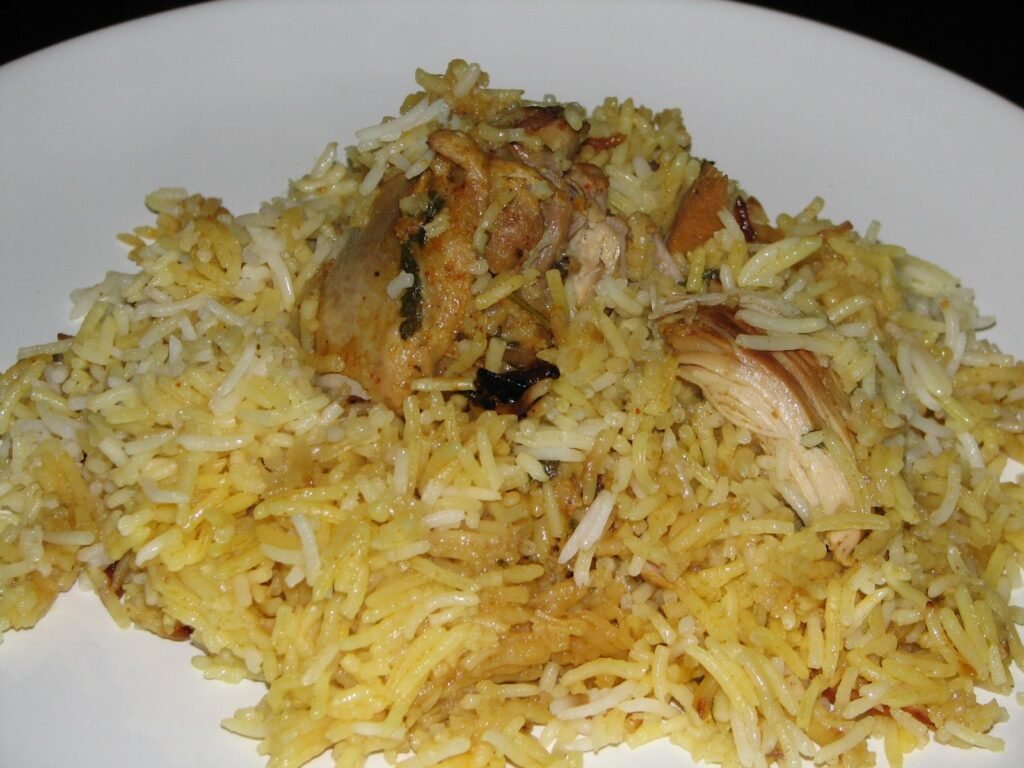
Awadhi (Lucknowi) biryani is fragrant and gentle rather than fiery. The flavour comes from whole spices, saffron, slow-fried onions and a few drops of kewra or rose water, not from heaps of chilli. The rice should be long, separate and lightly coloured in patches by saffron, with soft, juicy mutton underneath.
Pakki vs kacchi: why this method is easier at home
Awadhi biryani is usually made the pakki way: the meat is cooked first, then layered with part-cooked rice. Hyderabadi kacchi biryani layers raw marinated meat with rice and cooks them together, which is harder to judge. With pakki, you can check the mutton is tender before it goes under the rice, so there’s no risk of undercooked meat.
The ingredients that matter

Basmati riceUse long-grain, preferably aged basmati. It stays separate and fluffy. Par-boil it to about 70%: a grain should break with a firm white dot in the centre.

Bone-in muttonCurry-cut pieces with bone give the yakhni (stock) its body. Shoulder or leg cuts work well.

Bay leavesOne of the whole spices simmered with the mutton for the yakhni.
Green cardamomSimmered in the yakhni; it gives Awadhi biryani its soft, fragrant character.

ClovesA few go into the yakhni. They are strong, so don’t overdo it.

CinnamonA small stick in the yakhni for warmth.

Black peppercornsAdd a gentle heat to the stock.
Fennel seedsA mild sweetness in the yakhni.

Onions for biristaSliced and slow-fried until deep golden; they add sweetness and richness. Dark brown onions turn the biryani bitter.
Yogurt (dahi)Cooked with the mutton and spices for the masala; it tenderises and adds tang.

Garam masalaGoes into the mutton masala.
GheeFor frying the onions, cooking the masala and drizzling over the layers.
Saffron in warm milkFor colour and aroma on the top layer.

Mint leavesScattered between the layers for freshness.
Ginger-garlic paste and mace: both go into the mutton masala; use mace (javitri) sparingly. Kewra and rose water: optional and used in drops. Too much tastes like perfume. A small ball of wheat dough seals the pot for the dum.
Step by step, with the cues to look for
- Make the yakhni. Simmer the mutton with whole spices for 60–70 minutes (or 4–5 pressure-cooker whistles). It’s ready when a piece gives easily to a fork but doesn’t fall apart. Keep about 2 cups of the strained stock.
- Fry the onions. On medium heat, stirring often, until deep golden brown, 12–15 minutes. Pull them off the heat as soon as they’re evenly golden; dark brown onions turn the biryani bitter.
- Make the masala. Cook the mutton with yogurt, ginger-garlic paste, garam masala and mace until you see ghee shining at the edges, about 8–10 minutes.
- Par-boil the rice. In plenty of salted water, 5–6 minutes. Press a grain between your fingers: it should break with a firm white dot in the centre. That’s 70% cooked.
- Layer. Spread the rice over the mutton, then add fried onions, mint, saffron milk, kewra or rose water, ghee and a little stock. Don’t stir.
- Seal and dum. Seal the lid with a rope of dough. Give it 5 minutes on high, then set the pot on a tawa over the lowest heat for 20–25 minutes. You should smell the saffron and hear only a faint sizzle.
- Rest. Leave it closed for 10 minutes before opening, then scoop from the side so every plate gets rice and meat.
Common mistakes and fixes
| Problem | Likely cause | Fix next time |
|---|---|---|
| Mushy rice | Boiled past 70%, or too much stock added | Drain while the centre is firm; add only ½ cup stock before dum |
| Dry, hard rice on top | Seal leaked or too little moisture | Seal well with dough; sprinkle a few spoons of warm stock and re-steam 5 minutes |
| Burnt bottom | Heat too high during dum | Use a heavy pot on a tawa over the lowest flame |
| Tough mutton | Yakhni stopped too early | Check tenderness before layering; simmer longer if needed |
| Bitter taste | Onions fried too dark | Stop at deep golden |
Substitutions and variations
- Chicken: use 1 kg bone-in chicken and simmer the yakhni for only 20–25 minutes.
- No kewra or rose water: leave them out; add a few extra mint leaves instead.
- Oil instead of ghee: works, but the biryani will be less rich. Use at least a little ghee on top.
- Pressure cooker: fine for the yakhni to save time, but finish the biryani on slow dum in a heavy pot for the best texture.
Storage and reheating
The yakhni and cooked mutton can be made a day ahead and kept covered in the fridge. Leftover biryani keeps in the fridge for up to 3 days. Sprinkle a little water over it and reheat gently, covered, until steaming hot right through. It also freezes for about a month, though the rice softens a little.
What to serve with it
Keep the sides simple so the biryani stays the star: cucumber or onion raita, sliced onions with lemon and a fresh salad. For a feast, add a mild korma or shami kebabs.
The recipe
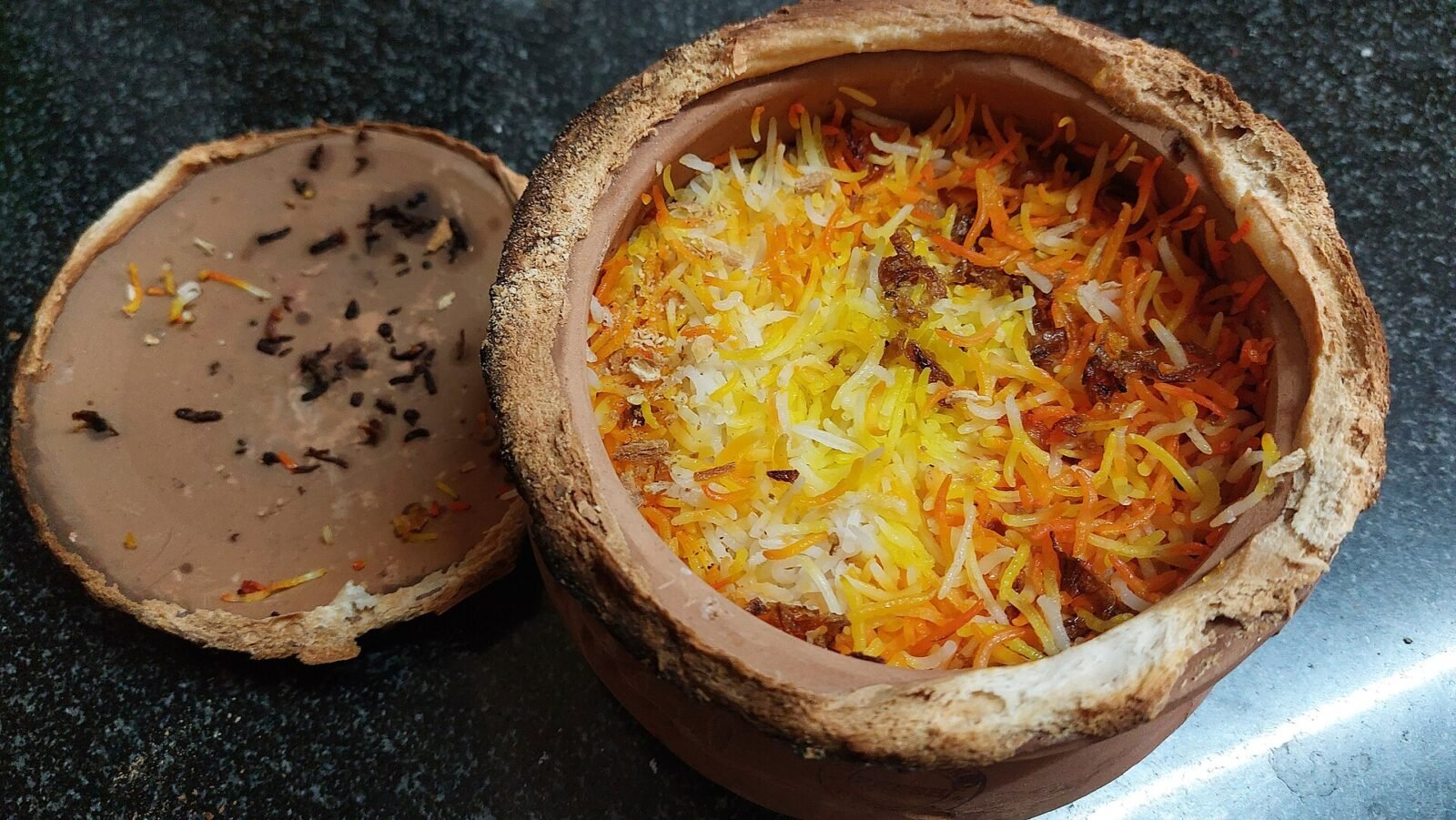
Awadhi Mutton Dum Biryani
Ingredients
Method
- Make the yakhni: put the mutton, water, whole spices, fennel, 1 tbsp ginger-garlic paste and salt in a large pot. Simmer with the lid on for 60–70 minutes until the meat is almost tender (or pressure-cook for 4–5 whistles). Lift out the mutton and strain the stock. Keep about 2 cups of stock.
- Heat 4 tbsp ghee in a heavy pot. Fry the sliced onions on medium heat, stirring often, until deep golden brown (12–15 minutes). Take out half the onions and keep them for the layers.
- Add 1 tbsp ginger-garlic paste to the pot and stir for 1 minute. Add the cooked mutton, whisked yogurt, garam masala and mace. Cook for 8–10 minutes until the ghee starts to separate. Pour in 1 cup of the stock and bring to a simmer.
- Meanwhile, boil about 3 litres of salted water. Add the drained rice and cook for 5–6 minutes, until about 70% cooked (soft outside, still firm in the middle). Drain well.
- Spread the rice over the mutton. Top with the saved fried onions, mint, saffron milk, kewra and rose water (if using), the remaining 2 tbsp ghee and ½ cup of stock. Do not stir.
- Press a rope of dough around the rim and close the lid to seal it. Cook on high heat for 5 minutes, then put the pot on a flat tawa over the lowest heat for 20–25 minutes.
- Turn off the heat and leave the pot closed for 10 minutes. Break the seal and serve by scooping from the side so each plate gets rice and meat. Make sure the mutton is fully tender before serving.
Notes
More from Uttar Pradesh
Lucknow is still one of the best places in India to eat this biryani. If you’re travelling in the state, our Varanasi travel guide covers the food of the ghats, and our Ayodhya Deepotsav guide helps plan a festival trip. For visitor information, see Uttar Pradesh Tourism or our Uttar Pradesh hub. Craving something spicier? Try our Chettinad pepper chicken.
Frequently asked questions
What is the difference between Awadhi and Hyderabadi biryani?
Awadhi biryani is usually made the pakki way: the meat is cooked first in yakhni and then layered with rice. Hyderabadi kacchi biryani layers raw marinated meat with rice and cooks them together. Awadhi biryani is also milder and more fragrant.
Is Lucknowi biryani the same as Awadhi biryani?
Yes. Lucknow was the capital of Awadh, so both names refer to the same style.
How do I know the rice is 70% cooked?
Press a grain between your fingers. It should be soft outside but break with a firm white dot in the centre.
Can I make mutton dum biryani in a pressure cooker?
You can pressure-cook the mutton for the yakhni. For the best texture, finish the layered biryani on slow dum in a heavy pot.
Can I make it with chicken?
Yes. Use bone-in chicken and simmer the yakhni for about 20 to 25 minutes.
How long does biryani keep in the fridge?
Up to 3 days, covered. Reheat gently with a sprinkle of water until steaming hot.
Cover photo: Umesh Tongbra / Wikimedia Commons, CC BY-SA 3.0 (source).