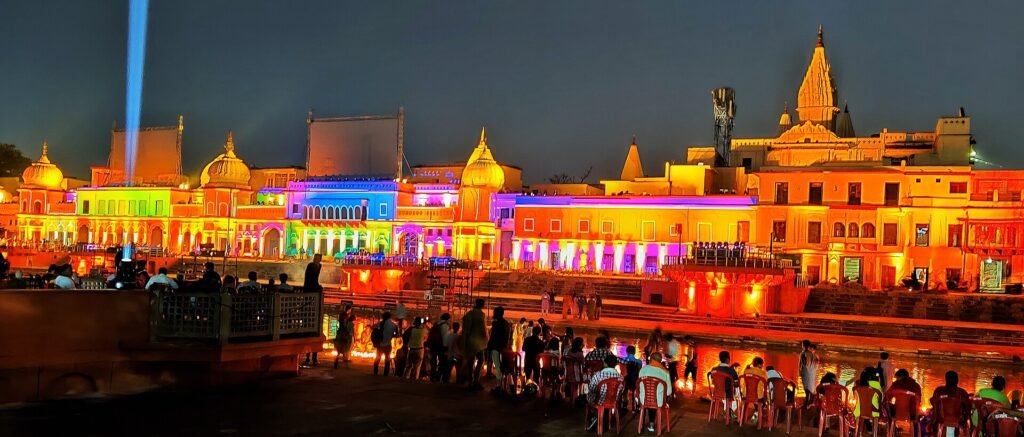
Ayodhya Deepotsav 2026 lights its lamps on the evening of Saturday 7 November, the night before Diwali. Most people planning to go worry about getting a hotel room or a train seat. The harder part comes on the evening itself: Ram Ki Paidi, where the lamps are lit, is closed to most visitors that night, roads shut from the morning, and everyone tries to leave at the same time. This guide covers those three problems: getting in, where you can actually stand, and how to get out.
- Festival days: 5 to 7 November 2026, the 10th Deepotsav.
- Main lamp-lighting: Saturday 7 November, around sunset (a little after 5 pm). Diwali is on Sunday 8 November.
- Where: Ram Ki Paidi and the ghats along the Saryu, with temples across Ayodhya Dham lit up too.
- Scale: pre-event reviews put the target at about 30 to 33 lakh diyas. The 2025 Guinness count was 26,17,215.
- Cost: watching is free. What’s limited is space, not tickets.
On this page
You may see 6 or 8 November on some websites. The 5 to 7 November dates were reported after the administration’s October reviews, with the lighting on the 7th. Check the Ayodhya district website in the last few days before you travel in case anything moves.
Ram Ki Paidi Deepotsav access: can you get onto the ghat?
Most likely not, and it’s better to know that before you go. On the main evening of the Ram Ki Paidi Deepotsav, the ghat is used by the volunteers who light the lamps (about 34,000 of them this year), invited guests, officials and media. In 2024 police sealed all 17 lanes leading to Ram Ki Paidi in the days before Deepotsav and let in only volunteers, officials and pass holders.
Some websites say anyone can get a “free Deepotsav e-pass” online. Be careful with these. Passes have come from the district administration and UP Tourism, mostly for invitees, and no general public pass had been announced when we checked. If a site asks for money or your ID details for a Deepotsav pass, don’t use it. Only trust what appears on ayodhya.nic.in or UP Tourism’s own channels.
This doesn’t make the trip a waste. It just changes the plan. You won’t be on the steps among the diyas on the 7th, but there are two good ways to see them up close and several decent places to watch the main night.
Diwali in Ayodhya 2026: which day to be there
If you can, plan Diwali in Ayodhya 2026 as a three-day trip, 6 to 8 November. Each day gives you something the others don’t.
- 5 and 6 November: the ghats are usually still open while volunteers lay out lakhs of unlit diyas in long patterns. You can walk among them, and it’s the one time you’ll see the scale of the work up close. Cultural programmes run in the evenings, along with the daily Saryu aarti. This is also the best time for Ram Mandir darshan.
- 7 November: the main night. A Shobha Yatra procession around midday, programmes at Ram Katha Park, then the Saryu aarti and lamp-lighting at dusk, followed by the laser, drone and fireworks show.
- 8 November (Diwali): the city is still decorated, the ghats reopen, and the evening is calmer. Temples like Kanak Bhawan and the Ram Mandir are lit, though darshan queues are very long.
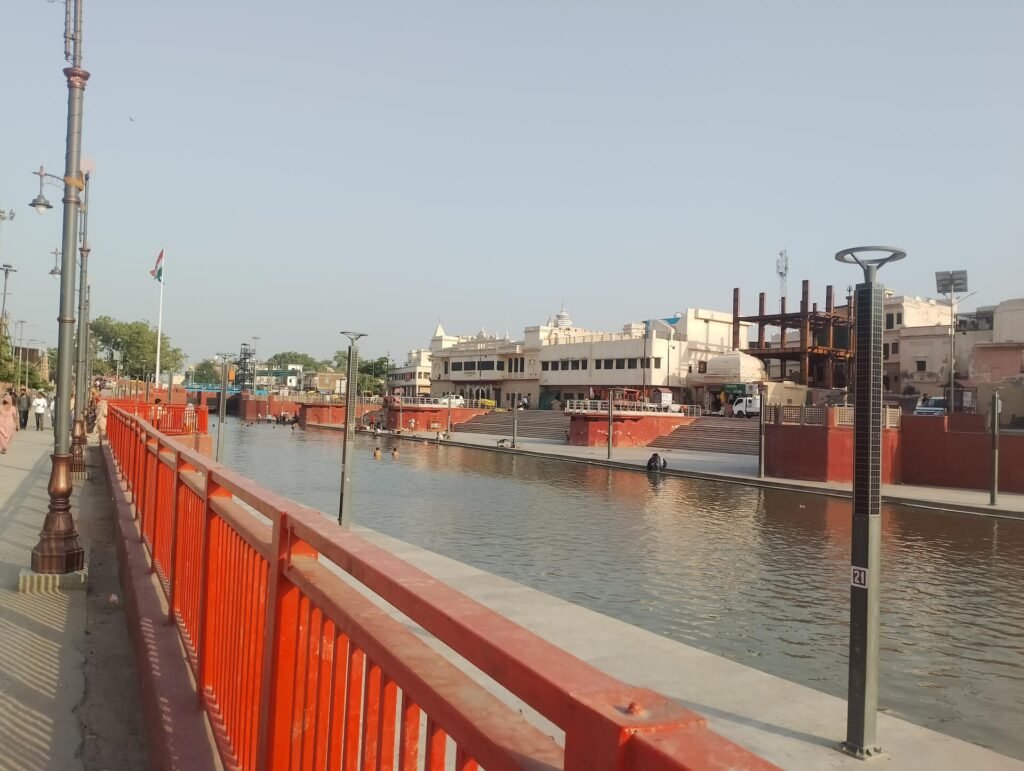
A common mistake is planning Ram Mandir darshan for the 7th. That’s the busiest day of the year in Ayodhya, and the roads and queues work against you. Go on the morning of the 6th, or very early on the 8th. Darshan is free, and the Ram Janmabhoomi Teerth Kshetra Trust’s official portal is the only place to book aarti passes. Ignore anyone selling “VIP darshan”.
Where to stand on 7 November
If you can’t get onto Ram Ki Paidi, here are the realistic ways to watch Ayodhya Deepotsav 2026.
The other lit ghats. The lamps no longer stop at Ram Ki Paidi. In 2025 they covered 56 ghats, including newer ones like Raj Ghat, Guptar Ghat and Laxman Qila Ghat. These are less tightly controlled and have more room. You won’t get the famous view down the main steps, but you will be standing among real lamps by the river. Ask your hotel or the police at the barriers which ghats are open to the public that evening, because it can change from year to year.
Near the big screens. In past years the main evening was shown live on large LED screens around town and on Doordarshan. A spot near a screen at one of the main chowks or near Ram Katha Park lets you follow the aarti and the count while you’re out among the crowd. Go early, around 3 pm, if you want to stand close.
Anywhere with open sky toward the river. The drones and fireworks go up high, so you can see them from a wide area around the Saryu. A rooftop or terrace near the riverfront is worth more than a hotel room with a “river view” you’ll never reach by road. If your hotel has a roof, ask whether guests can use it that evening.
How the main evening runs
Exact times are usually announced only a few days before. Going by recent years and this year’s plans, expect roughly this:
| Time (approx.) | What happens | What it means for you |
|---|---|---|
| Morning | Vehicle restrictions start in the centre | Be in town, or at your hotel, before this |
| Around midday | Shobha Yatra procession towards Ram Katha Park | Roads near the route close; good to watch if you’re nearby |
| 2 to 4 pm | Crowds settle along the riverfront | Pick your spot now; later arrivals get pushed back |
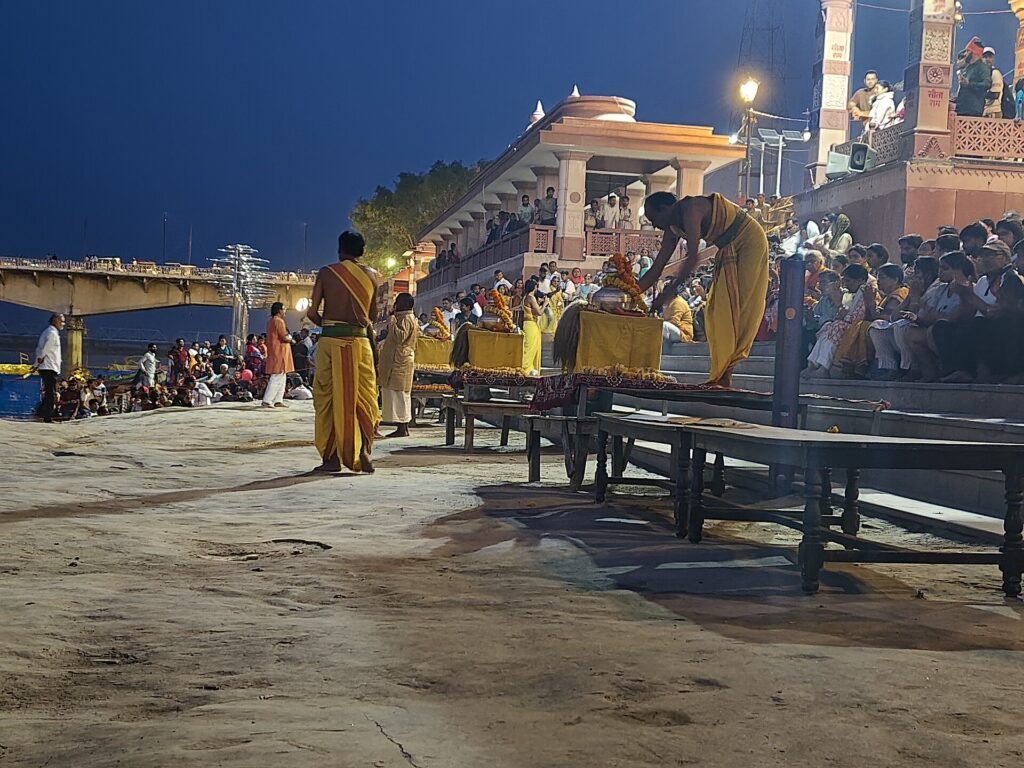
| Around 5 pm | Saryu Maha Aarti and the lamp-lighting | The main moment; it gets dark fast after sunset |
| About 6 to 8 pm | Laser and projection show, drones, green fireworks | Visible from a wide area; decide your exit before it starts |
| 8 to 9 pm | Most people leave together | The slowest part of the night |
About 2,100 drones are planned for this year’s show, along with Ramlila troupes from several countries. Early November evenings in Ayodhya are pleasant but cool down after dark, so bring a light jacket if you’ll be out till 9.
How to reach Ayodhya for Deepotsav
For Ayodhya Deepotsav 2026, get to Ayodhya by the 6th. Arriving on the morning of the 7th is possible, but you’ll hit the road closures and lose the afternoon you need to get into position.
- By air: Maharishi Valmiki International Airport is about 10 to 12 km from the ghats. Seats around Diwali sell out and fares jump. Lucknow airport, about 135 km away, usually has more flights and lower fares, but add roughly 3 hours by road, longer on festival days. Gorakhpur (about 130 km) and Varanasi (about 200 km) are other options.
- By train: Ayodhya Dham Junction is about 2 km from Ram Ki Paidi, so it’s the most convenient station. Ayodhya Cantt (the old Faizabad station) is about 10 km out. Festival-week trains fill weeks ahead, so check for Puja and Diwali special trains on the IRCTC app.
- By road: from Lucknow it’s a straight run on NH-27. If you’re driving from further away, our Diwali road trips from Delhi guide has tips on festival-week traffic and timing.
On the 7th, expect your car or taxi to be stopped at the outer barriers. In past years these have been at the Saket Petrol Pump side and at Tedhi Bazar (Guru Vashishth Chowk), with e-rickshaws also stopped from going further in. From there it’s usually a 2 to 3 km walk to the riverfront. Ayodhya Police normally publish the diversion map a day or two before, so look for it on their social media.
Where to stay, if you still need a room
Anywhere within walking distance of Ram Path and Naya Ghat is ideal, because on the 7th you won’t be driving anywhere. Those rooms go first. If they’re gone, Faizabad (Ayodhya Cantt side) is the usual fallback, but you’ll need to get into the centre before the morning closures and accept a long walk back at night.
Making it a day trip from Lucknow is the option most likely to go wrong. Leaving the ghats at 9 pm, walking to your car and then driving 135 km means getting back well after midnight on a busy highway. If you have no choice, book a driver who’ll wait at a fixed point outside the barrier, and don’t plan anything for early the next morning.
When to leave, and how to get out
Many guides spend a lot of time on getting in and very little on getting out. But leaving is when people get separated, tired and stuck, because lakhs of people head for the same few roads once the drone show ends.
- Choose early or late, not in between. Either leave as the show starts winding down, or settle in and wait until about 9:30 pm, when the first wave has cleared. Starting to leave at the very end puts you in the thickest part of the crowd.
- Fix a pick-up point and time with your driver before you leave them. Phone networks get overloaded near the ghats, so “I’ll call you when we’re done” often doesn’t work.
- Pick a meeting point for your group that’s easy to find in the dark, like a named shop or temple gate, not “near the screen”.
- Walk the route you came in on. Police often run one-way movement near the ghats, and lanes marked for residents may be closed.
- With children or older parents, stand near the edge of the crowd close to your exit, and leave before the show ends. You’ll see the lamps and most of the drones without the crush.
What to carry, and what to leave behind
Keep it light, because you’ll be walking several kilometres and standing for hours. Take water, a charged phone and a power bank, some cash for e-rickshaws and snacks, a government photo ID, any darshan or aarti pass, and a light jacket. Wear shoes you can walk in for a long time. Leave large bags at the hotel, since security checks at the barriers are slower with them and some areas may not allow them.
On food, eat a proper meal before 2 pm, because stalls near the riverfront get crowded. Before you leave Ayodhya, try the laddoo prasad from Hanuman Garhi. If you’re going on to Lucknow, our Awadhi biryani recipe is a good way to bring a bit of Awadh’s food back home.
Quick answers
What is the date of Ayodhya Deepotsav 2026?
The festival runs 5 to 7 November 2026, with the main lamp-lighting on the evening of Saturday 7 November. Diwali is on Sunday 8 November.
Is Ayodhya Deepotsav free?
Yes, there is no ticket. But Ram Ki Paidi itself is usually limited to volunteers, invitees and pass holders on the main night, so most visitors watch from other ghats, near the big screens, or from rooftops.
What time should I reach on 7 November?
Be in Ayodhya by the night before, and at your viewing spot by about 3 pm. Lamps are lit around sunset, a little after 5 pm.
Which is the nearest railway station to Ram Ki Paidi?
Ayodhya Dham Junction, about 2 km away. Ayodhya Cantt is about 10 km away.
Can I do Ram Mandir darshan on Deepotsav day?
You can try, but it’s the hardest day of the year to do it. The morning of 6 November or very early on 8 November is a much better choice.
If you’re keeping the festival season going, Dev Deepawali in Varanasi is on 24 November, about 200 km away by road, and our Varanasi travel guide covers the rest of that trip.
Photos: Ram Ki Paidi lit for Diwali (featured) by Abhimanyu7793 on Wikimedia Commons (source, CC BY-SA 4.0). Ram Ki Paidi waterfront by Vanshiikaa on Wikimedia Commons (source, CC0). Saryu Ghat aarti by Aliva Sahoo on Wikimedia Commons (source, CC BY-SA 3.0).