Quick answer: Jodhpur needs two days: Mehrangarh Fort when it opens at 9 am, the blue old city and Clock Tower in the evening, then Umaid Bhawan Palace, Jaswant Thada and the Toorji ka Jhalra stepwell on day two. Go between October and March, stay in the old city if you like walking, and don’t leave without mirchi vada and a makhaniya lassi.
Many visitors treat Jodhpur as a one-night stop between Jaipur and Jaisalmer, see the fort at noon in the heat, and miss the best part: the old city’s blue lanes in the soft evening light, with Mehrangarh glowing above. Give it two days and time the fort early and the lanes late, and it often becomes the favourite city of a Rajasthan trip.
Quick facts
Jodhpur, Rajasthan
- Best time to go
- October to March (November to February is nicest)
- Getting there
- Jodhpur airport, or a train to Jodhpur Junction
- Time needed
- 2 days (1 day covers the fort and the old city)
- Start with
- Mehrangarh Fort, right when it opens at 9 am
In this guide
Is Jodhpur worth visiting?
Yes. Mehrangarh is one of India’s most impressive forts and has one of the best-run museums in the country, the old city is great for walking, and the food is some of the best in Rajasthan. Compared with Jaipur, Jodhpur feels more compact and less hurried; compared with Udaipur, it’s more about forts and street life than lakes and romance.
Mehrangarh Fort
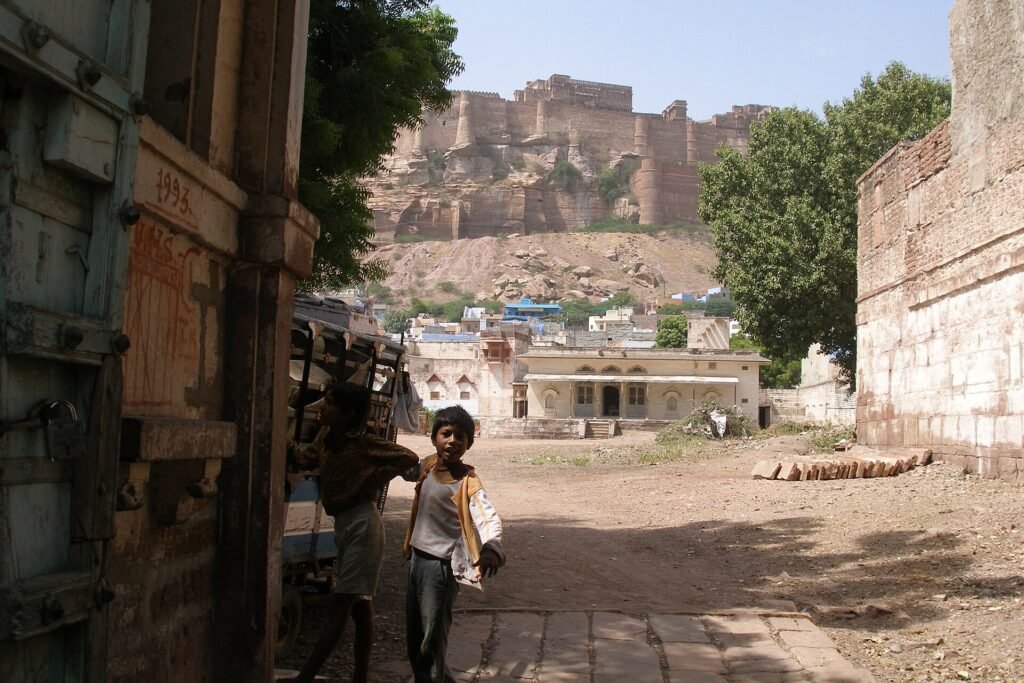
Rao Jodha founded Mehrangarh in 1459 on a rocky hill high above the city. Inside the massive walls are carved palaces and a museum of paintings, weapons, palanquins and royal cradles. The museum is open daily from 9 am to 5 pm; check tickets and the audio guide on the official Mehrangarh website.
One thing worth knowing: go at opening time. By late morning tour groups arrive and, for much of the year, the ramparts get very hot. Allow two to three hours, and don’t skip the views of the blue city from the walls.
The blue old city
Below the fort, the old city’s houses are painted shades of blue, especially around Navchokiya and Brahmpuri. People give several reasons: some say the colour began with Brahmin households, others that it keeps homes cooler or deters insects. Walking these lanes in the early evening is a highlight. Wear comfortable shoes; lanes are steep and uneven in places.
More places to see
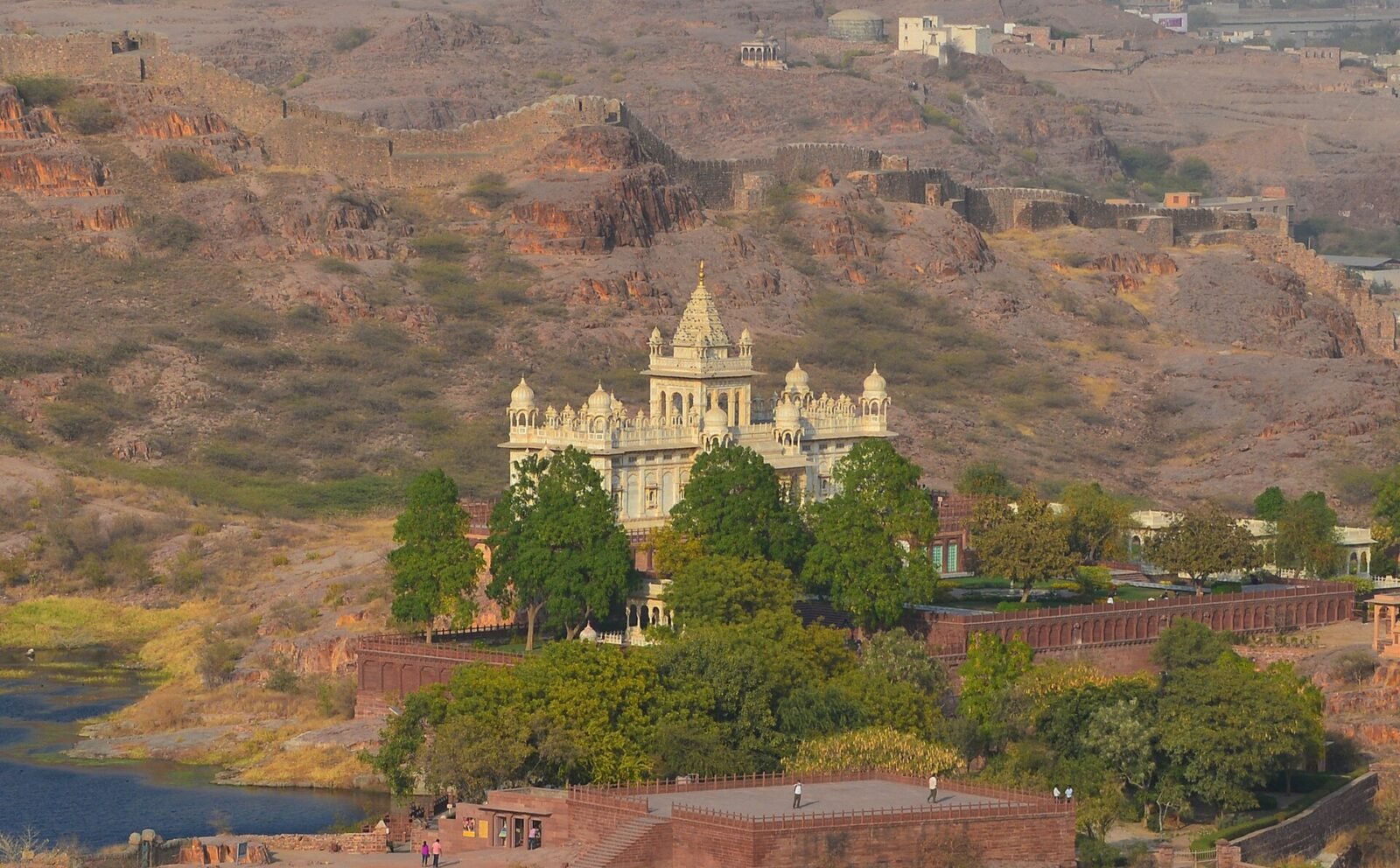
- Jaswant Thada: a white marble memorial built in 1899, a short walk from the fort, with lovely views back to Mehrangarh.
- Rao Jodha Desert Rock Park: walking trails with native desert plants next to the fort. Best early or late in the day.
- Clock Tower (Ghanta Ghar) and Sardar Market: spices, textiles and souvenirs; busiest in the evening.
- Umaid Bhawan Palace: a 20th-century palace, part museum, part hotel and royal residence.
- Toorji ka Jhalra: a restored stepwell in the old city, surrounded by cafés.
- Mandore Gardens: the older capital, with cenotaphs and temples, about 9 km north.
What to eat
- Mirchi vada: a big green chilli stuffed with spiced potato, battered and fried. Janta Sweet Home near the Clock Tower is one well-known place.
- Pyaaz kachori: flaky pastry with spiced onion filling.
- Makhaniya lassi: thick, sweet lassi, often with saffron and cardamom.
- Mawa kachori: a sweet kachori filled with milk solids and dipped in syrup.
Where to stay
Old city near the Clock Tower: heritage guesthouses and rooftop cafés with fort views. Lanes are narrow and busy, so it suits travellers who like to walk.
Ratanada and the newer areas: quieter streets and bigger hotels, easier if you’re driving.
How to reach and get around
Jodhpur has an airport and a major railway station, Jodhpur Junction, with trains from Delhi, Jaipur, Mumbai and other cities. In the old city, walk or take an auto-rickshaw; cars struggle in the lanes.
Best time to visit
October to March, when days are warm and nights cool. From April to June temperatures can go above 40°C, so plan sightseeing for early morning and evening.
A simple 2-day plan
Day 1: Mehrangarh at 9 am, Jaswant Thada, the Rock Park if it isn’t too hot, a rest through midday, then the blue lanes and the Clock Tower for mirchi vada and lassi.
Day 2: Umaid Bhawan Palace museum in the morning, Toorji ka Jhalra and Sardar Market in the afternoon, sunset from a rooftop café facing the fort.
One day only? The fort in the morning and the old city in the evening are what most people remember.
Common mistakes
- Visiting the fort at midday in the hot months.
- Staying far out of town and missing the old city at night.
- Rushing through in one night between Jaipur and Jaisalmer.
- Not agreeing auto fares before you set off.
Day trips and onward travel
For a quiet desert night, see Khimsar in our offbeat village homestays guide. In winter, the Kumbhalgarh Festival is a good reason to head south towards Udaipur. Travelling on a budget? Our travel in India on a budget tips cover trains and cheap stays. If you’re in Rajasthan in November, see our Pushkar Mela guide.
Frequently asked questions
How many days do I need in Jodhpur?
Two days is ideal. One full day covers Mehrangarh Fort and the old city; the second lets you see Umaid Bhawan Palace, the stepwell and markets without rushing.
Is Jodhpur worth visiting?
Yes. Mehrangarh is one of India’s most impressive forts, the blue old city is great for walking and the food is excellent.
What are Mehrangarh Fort’s timings?
The museum is open daily from 9 am to 5 pm. Arrive at opening time to avoid crowds and heat.
Why is Jodhpur called the Blue City?
Many old-city houses are painted blue. Explanations include a Brahmin tradition, keeping homes cooler and keeping insects away.
What is Jodhpur famous for?
Mehrangarh Fort, the blue old city, Umaid Bhawan Palace and snacks such as mirchi vada and pyaaz kachori.
Which is the best month to visit Jodhpur?
November to February has the most comfortable weather for sightseeing.
Cover photo: Vyacheslav Argenberg / Wikimedia Commons, CC BY 4.0 (source).