

Quick answer: For a first village homestay, Mawlynnong (Meghalaya) and Gavi (Kerala) are the easiest to plan. Ziro (Arunachal) needs an Inner Line Permit, Kaza (Spiti) needs time to acclimatise, and Khimsar (Rajasthan) suits a short desert break from Jodhpur. Plan two nights at least: one night barely gives you a morning in the village.
A village homestay is worth it if you want slow days, home food and a look at everyday life that hotels can’t give you. It’s not worth it if you need room service, strong Wi-Fi or a packed sightseeing list. Most disappointment with homestays comes from expecting a hotel, so this guide is about choosing the right village for the trip you actually want.
In this guide
The five villages at a glance
| Village | State | Best for | Best time | Nights to plan | Permit / booking note |
|---|---|---|---|---|---|
| Ziro | Arunachal Pradesh | Tribal culture, rice fields, music festival | Mar–Oct; festival usually late Sept | 2–3 | Inner Line Permit for Indians; Protected Area Permit for foreigners |
| Khimsar | Rajasthan | Short desert break, dunes, heritage stays | Oct–Mar | 1–2 | Easy road trip from Jodhpur |
| Mawlynnong | Meghalaya | Clean village walks, root bridge, families | Oct–May (monsoon is lush but very wet) | 1–2 | No permit for Indian nationals |
| Kaza | Himachal Pradesh | High-altitude monasteries, stark landscapes | Jun–Oct | 3+ | Acclimatise; Manali route open only in summer |
| Gavi | Kerala | Forest, wildlife, lake | Most of the year; check monsoon closures | 1 | Book through KFDC; entry pass at Vallakadavu checkpost |
Ziro, Arunachal Pradesh

Ziro is a wide, green valley that is home to the Apatani people, known for their wet rice cultivation, in which fish are raised in the flooded paddy fields. Older Apatani women traditionally wore facial tattoos and nose plugs, a custom that has since stopped, so it’s something to learn about respectfully rather than photograph on demand.
Who it suits: travellers interested in culture and farming, and music fans. The Ziro Festival of Music is usually held in late September; homestays fill up fast then, so book early or come another time for quieter days.
One thing worth knowing: Indian visitors need an Inner Line Permit to enter Arunachal Pradesh, which can be applied for online through the state’s e-ILP system; foreign nationals need a Protected Area Permit. Sort this before you travel, not at the border.
Khimsar, Rajasthan

Khimsar sits between Jodhpur and Nagaur, roughly a two-hour drive from Jodhpur, and gives you the desert without the crowds of Jaisalmer. The area has heritage havelis and small dune camps, and stays usually include Rajasthani meals, camel or jeep rides into the dunes and folk music in the evening.
Who it suits: couples and families who want one or two quiet desert nights. It pairs well with Jodhpur before or after.
A common mistake: visiting in May or June. Daytime desert heat is harsh from April onwards; October to March is far more comfortable, though nights in December and January get cold.
Mawlynnong, Meghalaya

Mawlynnong, a Khasi village near the Bangladesh border, became well known after being called the cleanest village in Asia in 2003. It’s about 78 km from Shillong, around two and a half hours by road. The Riwai living root bridge is a short walk from the road in the neighbouring village, which makes it one of the easiest root bridges to see.
Who it suits: families, first-time Northeast travellers and anyone who prefers gentle walks over steep treks. Indian nationals don’t need a permit for Meghalaya.
Many visitors come on a day trip from Shillong and leave by afternoon. Staying overnight in a village homestay means you see Mawlynnong in the quiet early morning, before day-trippers arrive. You can combine it with Dawki’s clear river nearby.
Kaza, Himachal Pradesh

Kaza is the main town of the Spiti Valley at about 3,800 m. Homestays in Kaza and nearby villages like Langza, Komic and Kibber are simple, warm family houses, often with home-cooked thukpa, momos and butter tea. Days are spent at monasteries such as Key and Dhankar, and on short walks.
Who it suits: travellers with time and a taste for raw, high-altitude landscapes. This is not a weekend trip.
Plan around two things. First, altitude: take it slow for the first 24–48 hours, drink water and avoid rushing up to the higher villages on day one. Second, access: the Manali route (via the Atal Tunnel and Kunzum Pass) is generally open only in summer, roughly June to October, while the longer Shimla–Kinnaur route stays open for more of the year. Spiti is close to the route of our Manali to Leh road trip if you’re planning a bigger Himalayan loop.
Gavi, Kerala
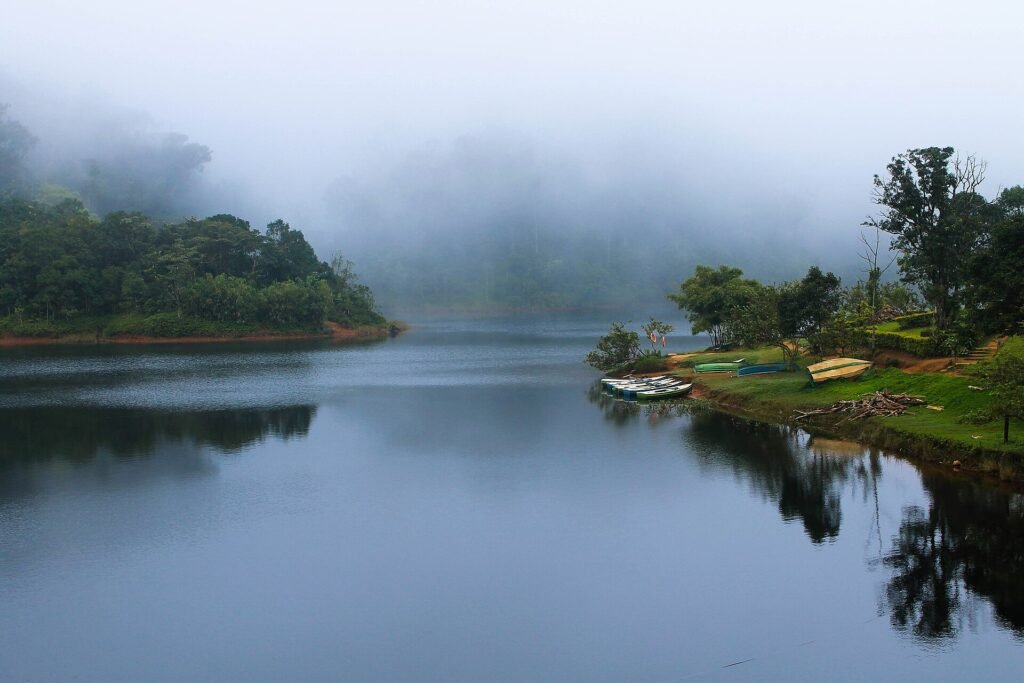
Gavi is a forest eco-tourism area in Pathanamthitta district, run by the Kerala Forest Development Corporation (KFDC), and about 40 km from Kumily (Thekkady). It’s less a village homestay than a forest stay: you book a day package or an overnight package, with accommodation at the KFDC eco-lodge or in tents, and the local community works as guides and cooks.
Who it suits: nature lovers and birdwatchers. Elephant and deer sightings are possible but never guaranteed.
A common mistake is turning up without a booking. Entry passes are issued at the forest checkpost at Vallakadavu, and KFDC asks visitors to book in advance, especially on weekends. Check the latest package details through Kerala Tourism or KFDC before you go. Pair it with our Kochi to Munnar road trip or a night on a Kerala houseboat.
How to choose the right homestay
- Short trip (1–2 nights): Khimsar from Jodhpur, Mawlynnong from Shillong, or Gavi from Thekkady.
- Culture first: Ziro or Mawlynnong.
- Landscape and monasteries: Kaza, if you have at least a week in Himachal.
- Travelling with children or older parents: Mawlynnong and Khimsar are easiest. Kaza’s altitude and long drives are hard on many people.
What a village homestay is really like
Rooms are usually clean but simple. Expect shared meals at fixed times, food cooked from what’s local and in season, limited mobile signal in places, and hot water that may come in a bucket. Hosts often welcome you into the kitchen or the fields if you show interest, but it’s their home, not a hotel, so ask before you photograph people or wander into private rooms.
Practical tips before you book
- Book directly or through state lists. Many state tourism boards list approved homestays; the Incredible India site is a good starting point.
- Ask what’s included. Most rates include breakfast and dinner, but confirm meals, heating in winter and pick-up from the nearest town.
- Carry cash. Village homestays often can’t take cards, and UPI depends on the signal.
- Dress modestly and learn a few local words. A simple greeting goes a long way.
- Pack for basics: a torch, a power bank, any medicines you need, and insect repellent for forest and northeast stays.
- Tell someone your plans, especially in places with patchy network like Spiti or Ziro.
Common mistakes
- Booking one night only and spending most of it travelling in and out.
- Ignoring permits for Arunachal and losing the first day to paperwork.
- Going to Spiti without time to acclimatise.
- Expecting restaurant menus. You’ll usually eat what the family cooks, so mention any dietary needs when booking.
Pairing homestays with a bigger trip
In Himachal in October, you could combine a quiet homestay with Kullu Dussehra, when village deities from across the valley gather in Kullu. For more Himalayan monasteries, see our guide to Ladakh monasteries. If you’re keeping costs low, our tips on travel in India on a budget help you plan the rest of the journey.
Frequently asked questions
What can I expect from a village homestay in India?
A simple, clean room in a family home, home-cooked meals and the chance to see daily village life. Facilities are basic compared with hotels.
Are village homestays safe for solo travellers?
Generally yes, especially well-reviewed or state-approved ones. Share your plans with someone, keep a charged phone and choose homestays with recent reviews from solo guests.
Do I need a permit for Ziro?
Yes. Indian nationals need an Inner Line Permit for Arunachal Pradesh, and foreign nationals need a Protected Area Permit. Apply before you travel.
How do I book a stay at Gavi?
Through the Kerala Forest Development Corporation, which runs the day and overnight packages. Book ahead; entry passes are issued at the Vallakadavu forest checkpost.
How many days do I need in Spiti?
At least three nights around Kaza, plus travel days. The drive in is long and you need time to acclimatise.
Top photo (village house, Mawlynnong): Sujan Bandyopadhyay / Wikimedia Commons, CC BY-SA 4.0. Travel details last checked: November 2026.


Pingback: Poush Mela 2026: Dates, Best Day to Go, Trains and Stays
Pingback: Majuli Island Guide: Best 2-Day Plan, Ferry Times, Satras
Pingback: Shillong Cherry Blossom Festival 2026: Easy Guide to Which Day to Go
Pingback: Kumbhalgarh Festival 2026: Dates, Fort & Best Udaipur Plan
Pingback: Double Decker Root Bridge Trek: 3,500 Steps & Easy Stay Plan
Pingback: Dhanu Jatra 2026 Date: Dhanu Yatra Is Now 12–22 Jan 2027
Pingback: Spiti Valley in Winter 2026-27: The Only Open Road & Safety